
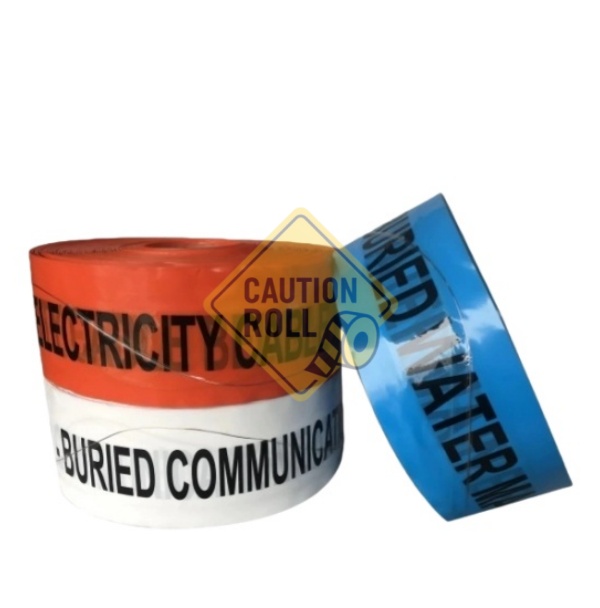
Utility Line Marking Tape (5)
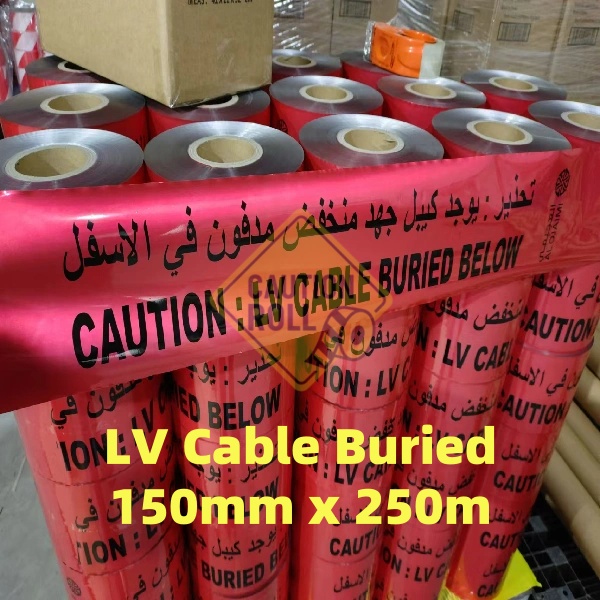
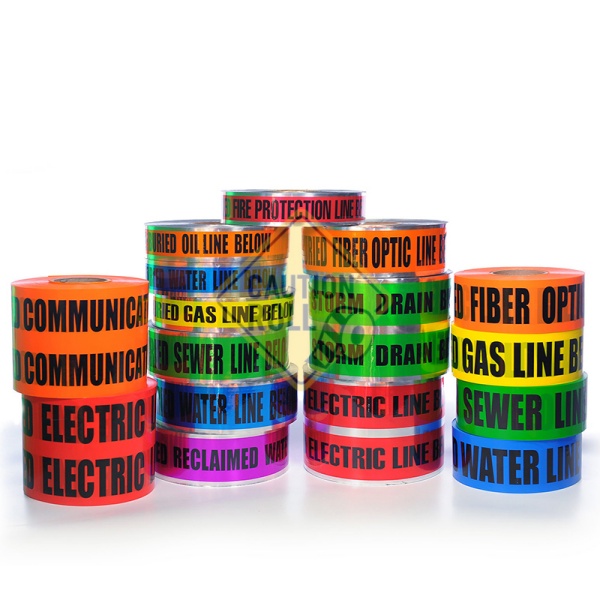
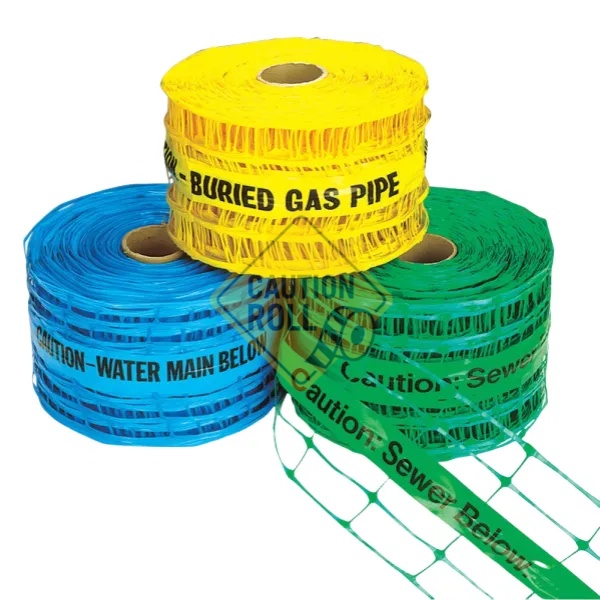
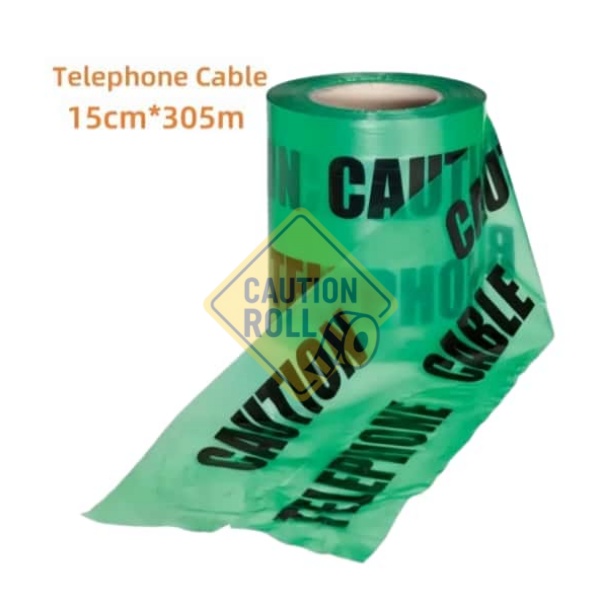
Caution Roll Company is a manufacturer of utility line marking tape for buried cable, pipe, gas, water, sewer, communication duct, and electric utility line identification. This category covers visual warning tape, detectable metallic tape, tracer wire warning tape, detectable mesh, and underground electrical warning tape for open-trench projects. Each product is installed above buried services during backfilling to provide color-coded warning and printed utility identification for future excavation work.
Porduct Details
· Size Range: 2 in, 3 in, 6 in, 12 in, and custom widths.
· Roll Length: Common 1000 ft rolls or project-specific lengths.
· Colors: APWA color references or custom utility colors.
· Materials: PE, LDPE, PP mesh, aluminum foil, metallic wire.
· Structures: Visual, metallic detectable, tracer wire, and mesh types.
· Custom Items: Legend, width, color, roll length, language, and wire structure.
Category Overview
Utility line marking tape is a below-ground warning and identification layer for buried utilities. It is not site barricade tape, road marking tape, floor marking tape, anti-slip tape, or vehicle reflective film. Its working position is inside the trench, above the cable or pipe, so future excavation crews reach a clear warning layer before contacting the service below.
One trench may include power cable, gas line, water pipe, sewer line, communication duct, or fiber optic cable. A documented route may need 4 mil visual PE tape. A non-metallic pipe may need 4.5-5 mil detectable tape. A long run may require tracer wire, while a wider corridor may need mesh.
Product Range / Covered Products
This category covers visual PE warning tape, detectable metallic tape, tracer wire tape, detectable mesh, and electrical warning tape. Visual tape works as marker tape for underground cable or underground pipe identification tape when color and wording are required. Detectable underground warning tape roll uses an aluminum foil core or metallic layer for PVC pipe, HDPE conduit, fiber optic duct, and similar services. Tracer wire tape supports long pipe, cable, or duct routes. Detectable mesh covers wider trenches and multiple lines. Detectable electrical marking tape is used for buried power cable and lighting conduit.
| Product Series | Covered Products | Best-Fit Scenario |
|---|---|---|
| Visual Warning Tape | PE tape, cable marker tape, pipe identification tape | Documented routes needing color and text |
| Detectable Metallic Tape | Foil core or metallic layer tape | Non-metallic utilities needing locating support |
| Tracer Wire Tape | Electrical warning tape with tracer wire | Long routes needing continuity checks |
| Detectable Mesh | PP mesh with wire or foil, 100 mm-700 mm | Wide trenches and multi-line corridors |
| Electrical Utility Tape | Detectable electrical marking tape | Power cable and lighting conduit |
Selection Guide
Start with the utility type and color reference. Red is used for electric power, yellow for gas or oil, orange for communication and fiber optic lines, blue for potable water, green for sewer or drain lines, and purple for reclaimed water or irrigation. Color, wording, and layout should match project drawings.
Then match structure to field needs. Non-detectable polyethylene tape is suitable when records are reliable and visual warning is enough. For PVC, HDPE, plastic duct, or buried fiber optic cable, use a detectable structure with foil or metallic layer. For long traceable routes, check wire continuity, joint method, and locator response. A 2 in or 3 in roll is common for narrow services, while 6 in or 12 in tape or detectable mesh is better for larger trenches.
| Material / Structure Selection | Typical Choice | Practical Note |
|---|---|---|
| PE / LDPE Film | Visual tape, often 4 mil | Placed above buried lines |
| Aluminum Foil Core | Detectable tape, 4.5-5 mil | Check foil continuity |
| Tracer Wire | Copper clad steel or stainless steel | Test wire and connector continuity |
| PP Mesh | Detectable mesh, 100 mm-700 mm | Better for wide trenches |
| Internal Lamination | Film-to-foil or mesh assembly | Not field adhesive |
Benefits
· Helps field crews identify buried utility lines before excavation reaches the pipe or cable.
· Covers visual, metallic detectable, tracer wire, mesh, and electrical warning product groups.
· Supports APWA color-based recognition and specification by trench width, utility type, and locating requirement.
· Supports sample checks for print clarity, film thickness, foil continuity, wire continuity, and locator response.
When Should Detectable Mesh Be Selected Instead of Narrow Warning Tape?
Detectable mesh is useful when the trench is wide, several utilities share one corridor, or a narrow strip may not cover enough risk area. Compared with standard utility line marking tape, mesh gives a broader warning zone above underground cables, pipes, communication ducts, gas lines, or water lines. For non-metallic pipe or duct, mesh with foil or stainless steel tracer wire can also support locator response. Before backfilling, confirm mesh width, warning color, printed message, wire continuity, overlap method, and trench layout.
TDS / Technical Range
| Item | Typical Range / Customizable Value |
|---|---|
| Product Group | Visual, detectable metallic, tracer wire, mesh, electrical warning tape |
| Base Material | PE, LDPE, PP mesh, aluminum foil, copper clad steel, stainless steel |
| Thickness | 4 mil visual tape, 4.5-5 mil detectable tape |
| Width | 2 in, 3 in, 6 in, 12 in tape, 100 mm-700 mm mesh |
| Roll Length | Common 1000 ft roll or custom length |
| Color / Legend | APWA colors, custom utility text, multilingual print |
| Detectable Structure | Foil core, metallic layer, tracer wire, wire mesh |
| Checks | Print clarity, rub check, continuity, locator response |
| Installation | Placed above buried lines during backfilling |
Applications
· Electric utility trenches for buried power cable, lighting cable, and conduit.
· Gas, oil, water, sewer, drain, and wastewater pipe routes.
· Communication duct, telecom cable, signal cable, and fiber optic installations.
· Municipal infrastructure and industrial service corridors.
· Long non-metallic routes or wide trenches needing tracer wire or mesh coverage.
Customization Options
Caution Roll Company can adjust film thickness, tape width, mesh width, roll length, APWA color, warning legend, letter height, repeat spacing, language, and print layout. For detectable products, define foil width, metallic layer continuity, tracer wire material, wire position, and connector method. Samples can be checked for color, print rub, reading distance, wire continuity, and locator response.
How Should Utility Line Marking Tape Be Checked Before Backfilling?
Before backfilling, utility line marking tape should match the utility type, APWA color reference, printed warning legend, and required detectable or non-detectable structure. Visual tape checks include film strength, print clarity, width, and placement above the buried line. Detectable tape also needs layer continuity, wire connection, joint stability, and locator response.
FAQ
What is utility line marking tape used for?
It is installed above buried cables, pipes, gas lines, water lines, sewer lines, communication ducts, and electric utility lines to create a warning layer before future excavation reaches the asset.
What is the difference between visual and detectable warning tape?
Visual warning tape relies on color and printed text. Detectable tape adds foil, metallic layer, tracer wire, or mesh so suitable locating equipment can help identify the buried line.
Which width should be selected for underground utility marking?
Narrow service lines often use 2 in or 3 in tape. Larger trenches often use 6 in or 12 in tape. Detectable mesh is better for wide corridors or multiple services.
What should be confirmed before bulk production?
Confirm utility type, color, legend, thickness, width, roll length, detectable structure, wire material, mesh width, sample tests, continuity, joint method, and locator response.