Emergency Vehicle Reflective Striping
 | Emergency Vehicle Reflective Striping
|
Product Description
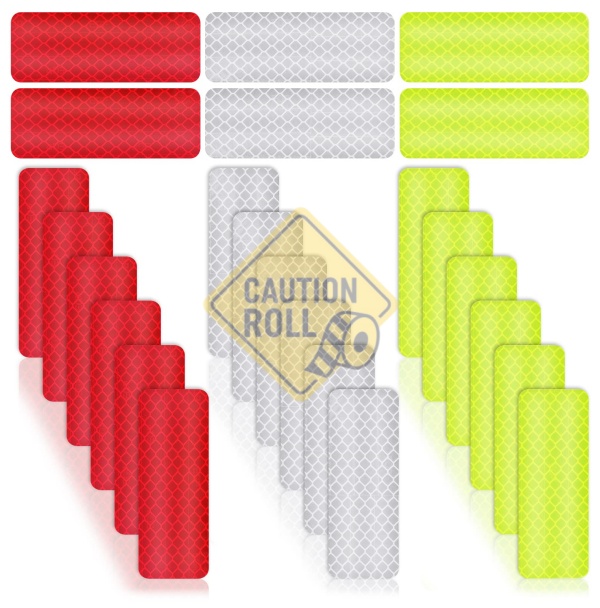
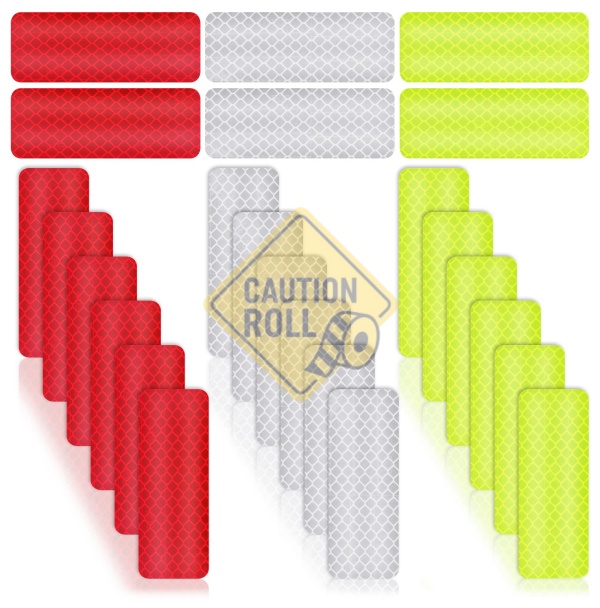
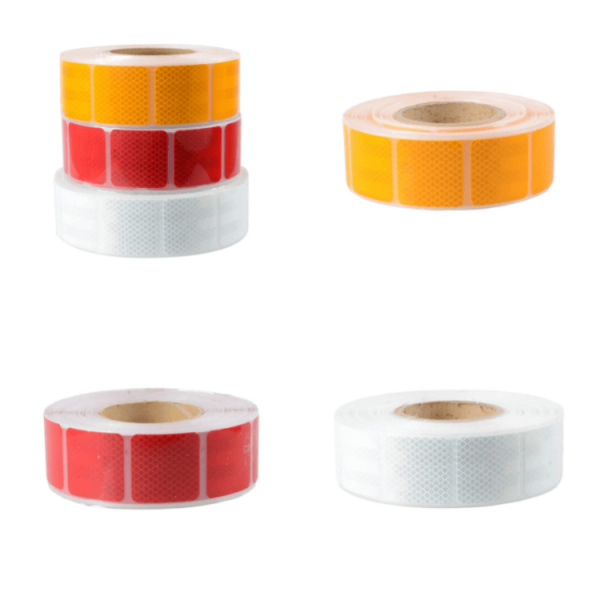
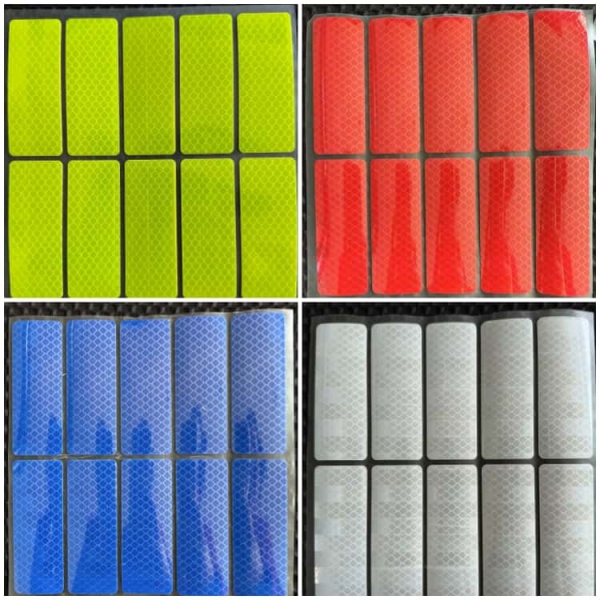
Caution Roll Company is a manufacturer of emergency vehicle reflective striping for ambulance, fire truck, rescue vehicle, and emergency fleet rear and side warning layouts. This striping system is made for rear warning, side outline recognition, and night roadside operation, not for ordinary vehicle decoration. It supports red-yellow or red-white chevron striping, high visibility reflective film, and pre-cut fleet installation on properly prepared vehicle surfaces.
Product Photos
Technical Data Sheet
Item | Typical Value |
Product type | Emergency vehicle reflective striping |
Reflective film structure | Micro-prismatic or glass bead reflective film |
Film thickness | 150 um-380 um, depending on grade |
Adhesive type | Permanent pressure-sensitive acrylic adhesive |
Adhesive thickness | 25 um-45 um |
Release liner | 120 g/m2-160 g/m2 paper or film liner |
Common stripe width | 4 in, 6 in, 8 in, 12 in, custom size |
Rear chevron layout | 45 degree red-yellow or red-white striping |
Cutting tolerance | Straight strips +/-1.5 mm, shaped panels +/-2 mm |
Pre-cut matching accuracy | Left-right rear panel matching within +/-2 mm reference |
Peel adhesion | >=18 N/25 mm after 24 h on painted metal |
Holding power | >=24 h at 23 C, 1 kg load reference |
Installation temperature | 10 C-35 C recommended |
Service temperature | -30 C to 80 C reference range |
Water wash observation | No obvious edge lifting after 24 h room-temperature water exposure |
UV exposure observation | Color and reflection checked after factory UV aging reference |
Surface suitability | Clean painted metal, smooth rear doors, flat panels, selected tread plate areas |
Installation note | Surface must be clean, dry, and free from wax, oil, dust, and loose coating |
Product Overview
Emergency vehicles are often parked where drivers have little time to react: road shoulders, accident scenes, tunnels, intersections, construction zones, and dark rural roads. In these places, reflective striping should do more than look bright. It should help approaching traffic read the rear boundary, side length, and working direction of the vehicle quickly.
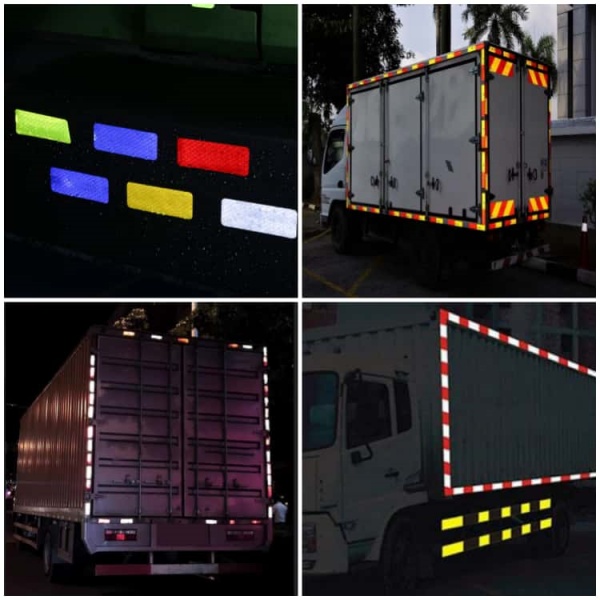
This emergency vehicle reflective striping combines rear chevron panels with side body outline marking. On an ambulance, fire truck, or rescue vehicle, red-yellow or red-white stripes can be arranged at a 45 degree angle, sloping downward and outward from the vehicle centerline. This gives the rear of the vehicle a clear warning pattern while leaving lamps, handles, hinges, sensors, windows, license plates, and access points open.
For the side body, the reflective film can follow the cab line, patient compartment, equipment box, lower body edge, and side access doors. This helps drivers recognize the vehicle length from angled headlights, rain spray, and low-light roadside views. For fleet use, Caution Roll Company can prepare rear and side panel sets based on door size, bumper area, compartment position, window position, and side marking layout. Typical factory cutting tolerance is +/-1.5 mm for straight strips and +/-2 mm for shaped panels, helping repeated vehicles keep a consistent stripe angle and left-right balance.
Benefits
- Helps improve rear warning visibility when emergency vehicles stop near moving traffic.
- Supports side outline recognition for ambulance, fire truck, and rescue vehicle bodies.
- Red-yellow striping gives strong warning contrast; red-white striping fits selected ambulance and white-body fleet layouts.
- Pre-cut rear and side panel sets reduce on-vehicle cutting and help keep 45 degree chevron alignment consistent.
- Pressure-sensitive adhesive is designed for clean painted metal, smooth doors, rear panels, and tested tread plate areas.
- Clean slit edges, stable adhesive coating, and pressure rolling help reduce edge lifting and dirt entry at seams.
- Layout drawings can reserve space for lights, handles, hinges, sensors, windows, license plates, compartment locks, and operational markings.
- Balanced reflective visibility helps define the vehicle shape without making the whole rear surface visually confusing.
Application
- Ambulance rear module chevron striping for rear warning and open-door scene visibility.
- Fire truck rear panels, tailboards, compartment doors, and side body outline marking.
- Rescue vehicle rear doors, side panels, bumper areas, and equipment body markings.
- Emergency vehicle side striping for vehicle length recognition at intersections and roadside scenes.
- Fleet replacement panels where repeated vehicles need the same stripe angle, color combination, and cut size.
- Command vehicles, service rescue units, and roadside response vehicles using high visibility reflective film.
- Red-yellow rear warning striping for large emergency vehicles working near traffic.
- Red-white striping for selected ambulance, utility rescue, and white-body fleet designs.
How should chevron striping be arranged on the rear of an emergency vehicle?
Rear chevron striping works best when it is planned as a directional warning layout. For ambulance rear warning panels, fire truck rear doors, and rescue vehicle reflective chevrons, the common design uses alternating red-yellow or red-white stripes that slope downward and away from the vehicle centerline. A 6 in stripe width is often selected for rear warning panels because it remains visible from a practical distance without covering key vehicle parts. In factory pre-cut checks, left-right matching accuracy is normally controlled within +/-2 mm, and shaped panel edges are checked against rear doors, windows, bumper lines, and lamp positions before bulk cutting.
Packaging Details
Loading Details
Why does emergency vehicle reflective striping need side outline visibility as well as rear warning?
Rear warning is important, but side outline visibility helps drivers understand the full size and position of an emergency vehicle when it is parked at an angle, turning into a scene, or working near an intersection. Side body outline marking along the cab, lower body, patient compartment, and equipment doors helps define the vehicle length under headlights and rain spray. Factory surface checks show stronger bonding on clean painted metal and smooth flat panels than on dusty, waxed, oily, or heavily textured surfaces. For selected tread plate areas, test application is recommended before full fleet installation because raised patterns can affect bonding and long-term edge stability.
FAQ
Can this product be supplied as pre-cut chevron panels?
Yes. It can be supplied as rear chevron panels, side strips, door markings, bumper pieces, and matched pre-cut kits for repeated fleet layouts.
Which color combination is commonly used?
Red-yellow is often selected for strong rear warning visibility, while red-white is used for selected ambulance, rescue vehicle, and white-body fleet layouts.
Can it be applied to any vehicle surface?
It should be applied to clean, dry, stable surfaces such as painted metal, smooth doors, rear panels, and tested tread plate areas. Loose coating, dust, wax, and oil should be removed first.
Is this the same as ordinary reflective car decoration tape?
No. This product is made for emergency vehicle rear warning, side outline recognition, chevron striping, night operation safety, and fleet pre-cut installation.