
Micro Prismatic Reflective Sheeting
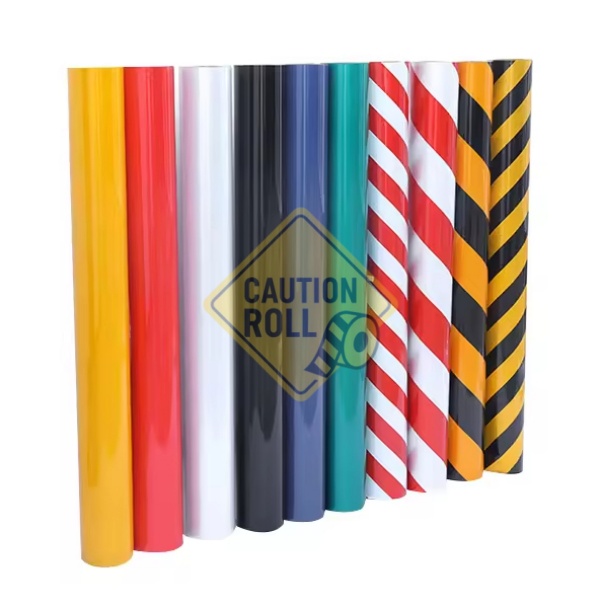
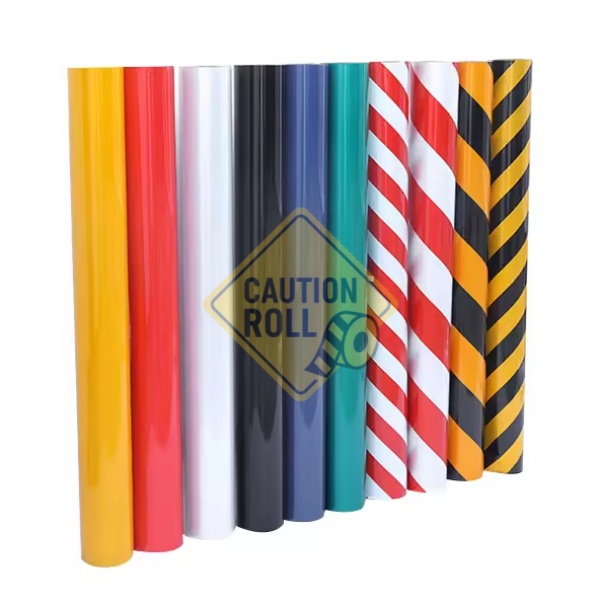 | Micro Prismatic Reflective Sheeting
|
Product Description
Caution Roll Company is a manufacturer of micro prismatic reflective sheeting for traffic safety signs, vehicle marking, and outdoor warning panels. The material uses a micro-prismatic lens structure to return headlight beams toward the driver, helping signs stay visible in day and night conditions. Supplied in roll, sheet, or slit-roll format, it can be made with PMMA, PVC, or PET surface film, adhesive backing, and release liner for professional sign fabrication and safety marking work.
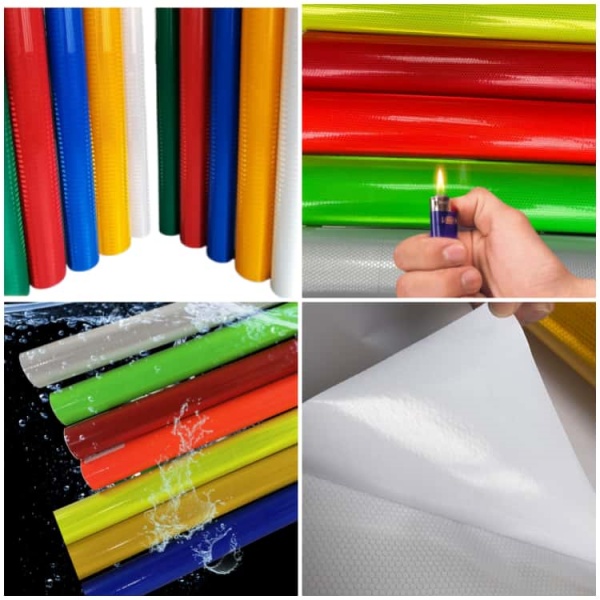
Product Photos
Technical Data Sheet
Item | Typical Value |
Product type | Micro-prismatic reflective film/sheet |
Surface film | PMMA, PVC, or PET option |
Optical structure | Micro-prismatic lens / cube-corner pattern |
Adhesive system | Pressure-sensitive permanent adhesive |
Release liner | Paper liner or film liner |
Total thickness | 0.18-0.32 mm, reference range |
Roll size | 1.22 m x 45.7 m, custom slit width available |
Sheet size | Cut-to-size sheets by project requirement |
Color options | White, yellow, red, blue, green, orange, fluorescent options |
Reflective grade reference | RA2/RA3 or Type III/IV project reference, final data by required test method |
Coefficient of retroreflection | Depends on color, grade, observation angle, entrance angle, and test standard |
Peel adhesion | 12-20 N/25 mm on clean stainless steel, typical reference value |
Liner release force | 10-35 g/25 mm, typical reference value for converting check |
Application temperature | 10-38 C recommended |
Service temperature | -20 C to 70 C, typical reference |
Width tolerance | +/- 1.5 mm |
Slitting tolerance | +/- 0.5 mm for regular slit rolls |
Edge-lift observation | 24-72 h after lamination on actual aluminum, coated metal, or vehicle panel |
Outdoor check | UV, rain, temperature exposure, color retention, adhesive holding, and edge stability observation |
Processing | Slitting, die cutting, plotter cutting, sheet cutting, lamination |
Product Overview
This prismatic sheet is made for traffic and safety projects where clear visibility, outdoor durability, and stable converting are more important than decorative reflection. Inside the film, arranged micro-prisms help control the retroreflection angle, so incoming vehicle headlights are directed back toward the driver under selected entrance and observation angles. In real installation, sign height, viewing distance, road speed, mounting direction, and vehicle headlight position can all affect visible brightness. For this reason, sample checking under realistic viewing conditions is more useful than judging brightness under indoor light only.
Surface selection also matters. PMMA is often chosen when outdoor weather resistance and color stability are important. PVC is useful when the film needs more flexibility on slightly curved panels. PET supports cleaner cutting and better dimensional stability for sheet converting. The pressure-sensitive adhesive backing is designed for cleaned aluminum boards, coated metal, composite panels, and selected vehicle surfaces. A stable release liner helps operators remove the backing smoothly during lamination, die cutting, and edge cutting, reducing liner tearing, wrinkles, uneven bonding, and damaged edges during batch processing.
For grade selection, RA2/RA3 or Type III/IV references can be used as project guidance according to viewing distance, traffic speed, sign size, mounting height, and local sign requirements. These references should be treated as selection guidance, not final certified data. When the material is used for regulated traffic signs or vehicle safety marking, coefficient of retroreflection should be confirmed by the required local test method before mass production.
Application
- Reflective sheeting for traffic signs used on aluminum boards, coated metal signs, and composite road panels
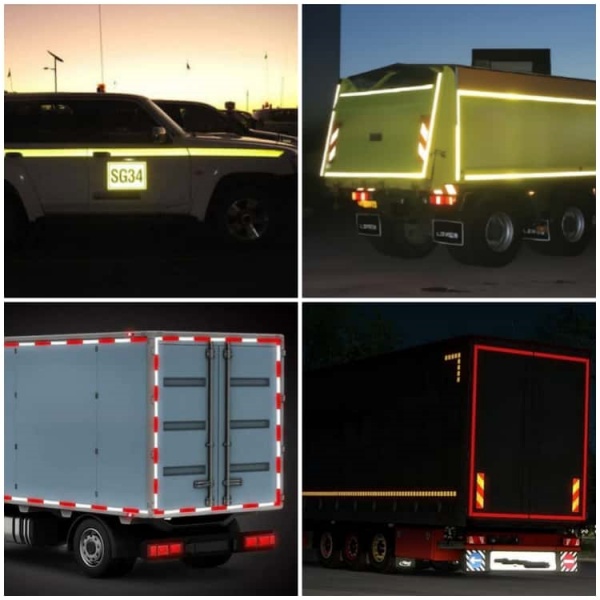
- Reflective sheeting for vehicle marking on trucks, trailers, fleet panels, service vehicles, and warning plates
- Outdoor sign reflective film material for parking signs, industrial safety boards, gate signs, and night-visible wayfinding panels
- Work zone signs, temporary warning boards, barricade panels, and road construction safety surfaces
- Warehouse direction signs, loading dock markers, facility boundary signs, and exterior caution displays
- Adhesive backed prismatic reflective sheet for sign shops, traffic facility producers, and fleet marking processors requiring roll, sheet, or slit-roll supply
Benefits
- Focused headlight return: The micro-prismatic optical structure improves night recognition for traffic safety signs and vehicle marking panels where entrance angle and observation angle affect brightness.
- Practical surface selection: PMMA, PVC, and PET surfaces give different balances of weather resistance, flexibility, cutting quality, color stability, and dimensional control.
- Stable converting: Roll, sheet, and slit-roll formats support sign shops, traffic facility producers, and fleet marking processors; regular slitting tolerance can be controlled around +/- 0.5 mm as a typical reference.
- Cleaner liner removal: The controlled release liner helps reduce wrinkles, liner tearing, uneven bonding, and edge damage during lamination.
- Outdoor reliability checks: Typical checks include UV exposure, rain contact, temperature cycling, color retention, adhesive holding, and 24-72 h edge-lift observation on the actual panel surface.
- Realistic grade matching:White and yellow usually show stronger visual brightness than darker colors, while RA2/RA3 or Type III/IV references should be selected according to project visibility needs.
How does the prismatic optical structure improve night visibility?
The micro-prismatic lens layer improves visibility by returning incoming headlight beams toward the driver instead of scattering light broadly. In road use, brightness is affected by entrance angle, observation angle, sign height, viewing distance, and vehicle headlight position. Reflective performance should therefore be checked under project-related angle conditions, not only by visual brightness indoors. Typical reference values can help compare material grades, but they should not be treated as final certified data unless confirmed by the required test report. Final retroreflection performance depends on color, surface film, grade, installation direction, and test method.When this sheeting is evaluated for regulated vehicle conspicuity use, compare the declared grade with the DOT-C2 specifications and test conditions.
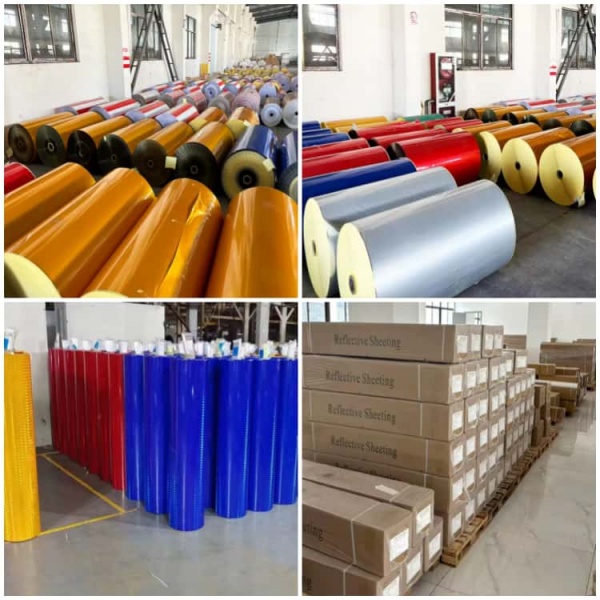
Production and Warehouse
Where should micro prismatic reflective sheeting be used instead of ordinary reflective film?
Micro prismatic reflective sheeting should be selected when a project needs controlled retroreflection, stronger night visibility, and outdoor durability for traffic signs or vehicle marking panels. Before bulk production, test the film on the actual substrate after removing oil, dust, moisture, wax, and loose coating. Edge lifting is more likely on wet panels, dusty surfaces, rough powder-coated metal, freshly painted surfaces, or curved vehicle areas without proper pressure. Sample lamination should check adhesive wet-out, liner removal, edge cutting quality, daylight color visibility, and 24-72 h edge stability before final approval.
FAQ
Is this material made with glass bead reflection?
No. It uses a micro-prismatic optical structure, making it more suitable for traffic safety signs, vehicle marking, and outdoor warning panels.
Can it be supplied as both rolls and sheets?
Yes. Standard rolls, slit rolls, and cut sheets can be supplied according to sign production and converting requirements.
Which surface film should be selected?
PMMA is often used for outdoor durability, PVC for flexibility, and PET for cleaner cutting and dimensional stability.
Should samples be tested before mass production?
Yes. Adhesion, liner release, edge cutting, color visibility, and 24-72 h edge lifting should be checked on the actual panel or vehicle surface.